
The Growing Need for Short-Distance 100G Connections
As data centers continue evolving, the demand for higher bandwidth keeps rising. Applications like artificial intelligence training, large-scale cloud services, real-time analytics, and high-performance storage systems generate enormous amounts of traffic. While long-distance optical modules solve the problem of connecting buildings or remote facilities, a significant portion of network traffic actually stays inside the data center.
Servers communicate with switches. Storage nodes exchange data with compute clusters. Top-of-rack switches link to aggregation layers only a few meters away. In these environments, long-distance optics are unnecessary and often inefficient.
This is where 100G DAC (Direct Attach Copper) cables come into play.
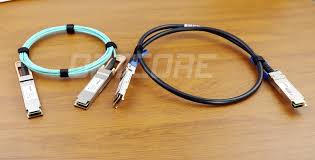
A 100G DAC cable integrates copper wiring and connectors into a single assembly that plugs directly into network devices. Unlike optical modules that require fiber cables, DAC solutions transmit electrical signals through high-quality copper conductors. These cables typically support distances from one to a few meters, sometimes up to seven meters depending on design.
For short connections inside racks or between adjacent racks, DAC cables provide a simple and cost-effective solution.
Understanding How 100G DAC Technology Works
At first glance, DAC cables look similar to ordinary copper networking cables. However, internally they are quite different. A 100G DAC cable is designed specifically for high-speed Ethernet interfaces such as QSFP28 ports.
The connectors at each end contain small electronic components that allow the cable to communicate with the switch or server. These components identify the cable type, length, and performance characteristics to the host device.
Inside the cable, multiple high-speed differential pairs carry electrical signals simultaneously. In most 100G implementations, the signal is divided into four lanes, each transmitting data at 25 gigabits per second.
The copper conductors are carefully engineered to minimize signal loss and electromagnetic interference. Shielding layers, precision twisting, and controlled impedance all help maintain signal quality across the cable.
From the device perspective, the connection behaves like any other Ethernet interface. Once plugged in, the switch detects the cable automatically and establishes the link.
The simplicity of this process is one reason DAC cables are so widely used in data center environments.
Typical Deployment Scenarios for 100G DAC Cables
DAC cables are most commonly found inside server racks. A typical setup involves connecting a top-of-rack switch to multiple servers located just a few meters away. Because the distance is short, using optical modules would introduce unnecessary cost and power consumption.
DAC cables provide a direct electrical connection that works perfectly for these short links.
Another common scenario is connecting switches within the same rack. Many data center designs include redundant switching equipment to ensure reliability. DAC cables allow these devices to exchange traffic quickly without requiring additional optical hardware.
High-performance computing clusters also make heavy use of DAC cables. In these environments, compute nodes communicate frequently with storage systems and accelerator hardware. Low latency and stable connections are critical.
Copper-based DAC cables often provide slightly lower latency than optical solutions because they avoid optical-to-electrical signal conversion.
For workloads that depend on extremely fast communication, even small latency improvements can matter.
Advantages of 100G DAC Cables in Data Center Networks
One of the most obvious benefits of DAC cables is cost efficiency. Optical modules require lasers, photodiodes, and other complex components. DAC cables rely on copper conductors, which makes them significantly less expensive for short distances.
Power consumption is another advantage.
Optical transceivers require electrical power to operate lasers and signal processing circuits. DAC cables, especially passive versions, consume little or no additional power beyond what the host device provides.
In large data centers with thousands of connections, these power savings can add up quickly.
Installation simplicity is also worth mentioning. With optical solutions, engineers must handle separate transceiver modules and fiber cables. DAC cables combine both elements into a single unit.
Technicians simply plug each end into the corresponding QSFP28 port.
There is no need for fiber cleaning procedures or optical alignment considerations.
This simplicity reduces deployment time and lowers the chance of installation errors.
Limitations of Copper-Based High-Speed Connections
Despite their advantages, DAC cables are not suitable for every situation.
The primary limitation is distance. Electrical signals traveling through copper experience more attenuation and interference than optical signals traveling through fiber. As a result, DAC cables typically support only short distances.
For connections longer than a few meters, optical solutions such as active optical cables (AOCs) or standard transceiver modules become more practical.
Cable thickness can also be a consideration. High-speed copper cables contain multiple shielding layers and conductors, which makes them thicker than fiber cables. In high-density racks with many connections, cable management may require additional planning.
However, these limitations are generally acceptable in the short-range environments where DAC cables are designed to operate.
The Role of DAC Cables in Future High-Speed Networks
As Ethernet speeds continue increasing beyond 100G, data centers are adopting new technologies such as 200G, 400G, and even 800G links. Yet the fundamental architecture of many facilities remains similar.
Servers still connect to nearby switches. Storage systems still sit only a few meters away from compute nodes. These short-distance connections will always exist inside data centers.
Because of this, copper-based direct attach cables are unlikely to disappear anytime soon.
Instead, DAC technology continues evolving to support higher speeds while maintaining low cost and simplicity.
Even in next-generation environments built around advanced optical networks, DAC cables will probably remain the preferred solution for the shortest connections.
They occupy a practical niche that optical technology cannot always replace.
Conclusion
100G DAC cables play a critical role in modern data center networks by providing efficient, low-cost connectivity for short-distance links. Their simple plug-and-play design, minimal power consumption, and reliable performance make them ideal for server-to-switch and intra-rack connections. While they cannot replace optical solutions for long-distance communication, DAC cables continue to offer significant advantages in environments where devices are located only a few meters apart. As data centers scale and demand faster connectivity, 100G DAC technology will remain a practical and widely used component of high-speed network infrastructure.
