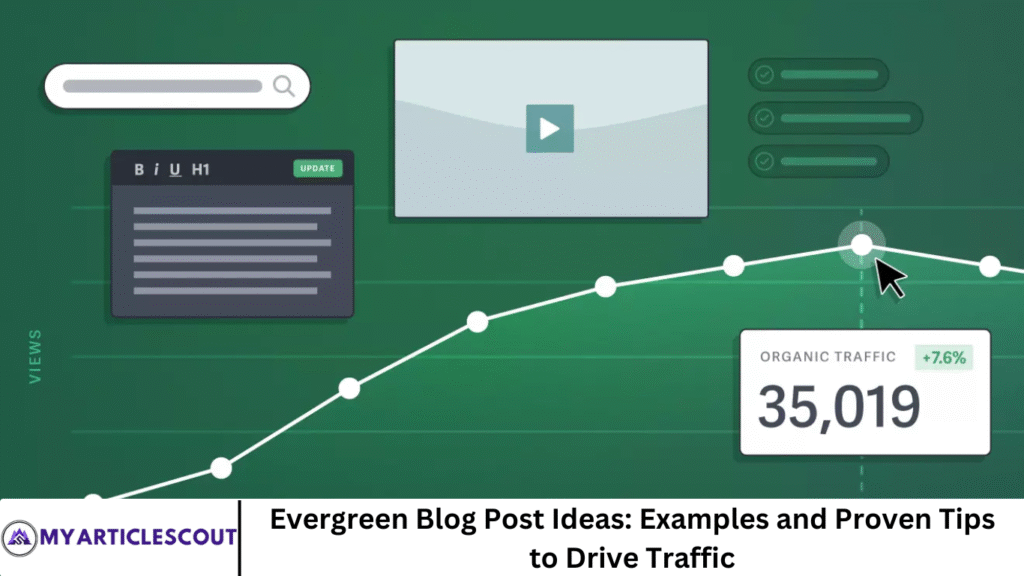
Creating evergreen blog content is one of the smartest long-term strategies for driving consistent traffic to your website. Unlike trending topics that spike and fade, evergreen content remains relevant and valuable to readers over time. In this guide, we’ll explore powerful evergreen blog post ideas, real-world examples, and actionable tips to help you craft content that continues to perform.
More Read: 50 Brilliant Social Media Post Ideas to Spark Engagement
What is Evergreen Content?
Evergreen content refers to blog posts and articles that maintain their value and relevance over time. These posts don’t rely on current events or seasonal interest; instead, they address timeless topics that people consistently search for.
Characteristics of Evergreen Content:
- Timelessness: The topic remains relevant for years.
- Search Demand: People consistently look for this information.
- Educational: Often how-tos, guides, or informational posts.
- Update-Friendly: Can be refreshed easily with minor tweaks.
Why Evergreen Content Matters
Investing in evergreen content pays off long after it’s published. Here’s why it’s essential:
- Steady Traffic: Evergreen content attracts continuous search engine traffic.
- SEO Benefits: Search engines favor content with long-term value.
- Lead Generation: Useful content builds trust and can capture leads consistently.
- Resource Efficiency: One high-quality evergreen post can outperform dozens of trend-based posts.
15 Evergreen Blog Post Ideas
Here are some top-performing evergreen blog formats across industries:
1. How-To Guides
Teach your audience how to solve a problem or complete a task.
- Example: How to Start a Blog in 2025
2. Ultimate Guides
Comprehensive resources that cover a topic in depth.
- Example: The Ultimate Guide to Email Marketing
3. Beginner’s Guides
Introduce a subject to those just starting out.
- Example: A Beginner’s Guide to Meditation
4. Tips and Tricks
Quick, actionable advice that solves common problems.
- Example: 10 Productivity Hacks for Remote Workers
5. Frequently Asked Questions (FAQs)
Answer common questions in your niche.
- Example: SEO FAQs: Everything You Need to Know
6. Checklists
Step-by-step lists that readers can follow.
- Example: The Ultimate Website Launch Checklist
7. Tutorials
Detailed walk-throughs of processes or tools.
- Example: How to Use Canva for Social Media Graphics
8. Case Studies
Demonstrate real-world results from a strategy or method.
- Example: How We Grew Our Email List by 10,000 in 6 Months
9. Glossaries
Define important terms in your industry.
- Example: The Complete Glossary of Digital Marketing Terms
10. Tool Roundups
Lists of tools that help users complete tasks.
- Example: Top 20 Free SEO Tools for Beginners
11. Resource Lists
Curated content that points to valuable materials.
- Example: 50 Free Courses for Entrepreneurs
12. Mistakes to Avoid
Educate by highlighting common pitfalls.
- Example: 7 Mistakes New Bloggers Make (and How to Avoid Them)
13. Comparison Posts
Help users choose between two or more options.
- Example: Mailchimp vs. ConvertKit: Which is Better?
14. Templates
Offer ready-to-use frameworks or formats.
- Example: Free Blog Post Template for Beginners
15. Best Practices
Share tested and proven methods for success.
- Example: Social Media Marketing Best Practices in 2025
Real-World Examples of Evergreen Content
Example 1: HubSpot Blog
HubSpot’s blog includes posts like “What is Inbound Marketing?” which consistently rank high and bring in traffic because they answer foundational questions.
Example 2: Neil Patel
Neil Patel uses evergreen formats such as “SEO Checklist” or “Guide to Google Analytics,” which are continually relevant and regularly updated.
Example 3: Healthline
Healthline’s articles on topics like “Benefits of Drinking Water” continue to drive massive traffic due to ongoing health interest.
Proven Tips to Create Evergreen Content
Follow these tips to make your evergreen blog posts stand out and perform long-term:
1. Conduct Keyword Research
Use tools like Google Keyword Planner, Ahrefs, or Ubersuggest to find terms with steady search volume.
2. Focus on Timeless Topics
Avoid news-driven content. Choose subjects that will be relevant today, next year, and beyond.
3. Write In-Depth Content
Google favors comprehensive posts that thoroughly address the topic.
4. Structure for Readability
Use headings, bullet points, and short paragraphs to make your content skimmable.
5. Use Internal Linking
Link to other relevant blog posts on your site to improve SEO and user experience.
6. Include Visuals and Examples
Graphics, screenshots, and examples make content more engaging and easier to understand.
7. Update Regularly
Schedule content audits to refresh outdated statistics, tools, or practices.
8. Promote Consistently
Share evergreen posts on social media, newsletters, and repurpose them into videos, infographics, or podcasts.
9. Add a Content Upgrade
Offer a downloadable resource (like a checklist or template) to grow your email list.
10. Monitor Performance
Use Google Analytics or Search Console to track your post’s performance and adjust as needed.
Frequently Asked Question
What is evergreen content, and how is it different from trending content?
Evergreen content remains relevant and valuable over time, like how-to guides or beginner tutorials. In contrast, trending content is time-sensitive and often tied to current events, seasons, or fads. Evergreen posts continue to drive traffic long after publication.
Why should I focus on evergreen blog posts instead of news-based content?
Evergreen blog posts generate consistent, long-term traffic and are more cost-effective. They require less frequent updates and have higher SEO value because they target stable search terms rather than fleeting trends.
What are some proven evergreen blog post formats that work across industries?
Some top formats include:
- How-to guides
- Ultimate or beginner’s guides
- Checklists and templates
- FAQs
- Tool roundups
- Case studies
- Tips and best practices
How can I make sure my evergreen content ranks well on Google?
To rank well:
- Conduct keyword research on long-term queries
- Write in-depth, helpful content
- Use clear headings and formatting
- Optimize for SEO with proper meta tags and internal links
- Regularly update the post to keep it accurate
How often should I update my evergreen blog posts?
Check and update evergreen content every 6 to 12 months. Refresh any outdated information, tools, statistics, or links to maintain search engine rankings and user trust.
Can evergreen content be shared repeatedly on social media?
Yes! Since the content stays relevant, you can promote it regularly on social media platforms, in newsletters, or repurpose it into other formats like videos, infographics, or podcasts.
What tools can help me come up with evergreen blog post ideas?
Useful tools include:
- Google Keyword Planner – for search volume trends
- AnswerThePublic – for question-based content ideas
- Ahrefs or SEMrush – for competitor research and keyword opportunities
- BuzzSumo – to find high-performing content in your niche
Conclusion
Evergreen blog posts are the backbone of a successful content marketing strategy. By focusing on topics with lasting relevance, leveraging proven formats, and applying smart SEO tactics, you can drive consistent traffic and deliver long-term value to your audience. Start by choosing a few evergreen ideas from this list, craft high-quality content around them, and watch your website grow over time.