
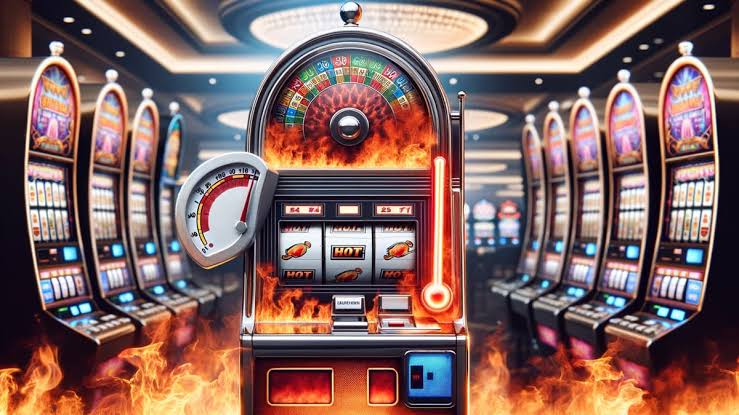
A short phrase can make an online game sound unusually promising. Words suggesting heat, momentum, or frequent rewards imply that something favorable is happening now. Yet the phrase may leave its central claim undefined. Does it refer to an observed result, a documented game characteristic, or simply a marketing impression?
That distinction matters when reading about online slots. A useful explanation separates promotional vocabulary from the information that describes how a game actually works. This is especially important for writers and readers who encounter unfamiliar gaming terms: repeating a popular label does not turn it into a technical measure.
A descriptive phrase is not automatically a specification
In online gaming language, slot gacor appears as a promotional search phrase associated with slots. It should not be treated as a standardized mathematical property. The phrase alone does not define a probability, a measurement period, a game configuration, or a reproducible test of the claim being suggested.
A genuine specification needs a definition. File size names a particular software measurement. A documented theoretical return names a different quantity. A broad claim that a game is hot does not become equivalent to either merely because it appears beside numbers or technical-looking graphics.
Imagine a fictional article calling a game unusually active after showing three awards. The evidence might establish that those awards occurred in the recorded material. It would not establish how the examples were selected, how much ordinary activity was omitted, or whether a future sequence would resemble them.
Ask what the adjective is trying to imply
Promotional adjectives can do several jobs. They may describe atmosphere, summarize a personal reaction, or suggest a claim about results. Those uses need different explanations. Exciting artwork is an opinion about presentation. More frequent awards is a measurable claim that needs a defined comparison.
A clear article should not allow one meaning to drift into another. It can describe a dramatic reveal without implying that the game produces better personal outcomes. It can report that a creator enjoyed a theme without treating that reaction as evidence about the mathematical design.
Comparisons require a reference point
A statement that one game pays more often needs to identify the products, configurations, conditions, and meaning of pays. A small award, a feature trigger, and an overall positive result are different events. Combining them under one undefined phrase can make a comparison sound more informative than it is.
The observation period matters too. A selected clip, one person’s experience, and a complete dataset are different kinds of material. A writer should name the material actually available rather than letting the reader assume a broader assessment. Precision usually improves the explanation more than another enthusiastic adjective.
Separate the visible result from the complete account
An image can show a large award without showing the activity surrounding it. That missing context matters because an individual result and an overall financial position are different quantities. A headline should not silently substitute one for the other.
Consider a fictional screenshot displaying 500 credits. The number needs a unit, a reference point, and an explanation of what it represents. It might be an award, a balance, or an illustration. Without those labels, the reader is being asked to supply meaning that the image itself does not establish.
The same issue arises when a video is edited for pace. Removing uneventful moments can make a sequence feel more concentrated. The resulting video may be useful for demonstrating an animation while remaining unsuitable evidence for a claim about how often the event occurs.
Game information answers narrower, clearer questions
The game’s own documentation should explain applicable rules, relevant symbols, and the basis of stated awards. Those details answer questions about the specific product. A general promotional phrase cannot replace them, and a description copied from a similarly named game may introduce further confusion.
The Gambling Commission’s RTS 3 standards address understandable rules, game descriptions, and information about the likelihood of winning within its regulatory framework. They provide a useful example of specific disclosure categories. They do not establish that a separate website complies with British requirements.
A reader can use that distinction without becoming a regulator or a software auditor. The important point is to recognize the difference between a defined rule and an undefined impression. The presence of one does not make the other unnecessary.
Preserve the configuration being discussed
A title or theme may be insufficient to identify every relevant detail of a product. An explanation should preserve the version or configuration where the source identifies one. If that information is unavailable, the missing context should remain visible rather than being filled with a figure from another source.
This is particularly important for theoretical measures. A number reported for one configuration should not automatically be attributed to every appearance of the same artwork. The article needs a basis for the connection. Visual familiarity is not that basis.
Past sequences do not create a personal timetable
In a model with independent random outcomes, the earlier sequence does not make a later result due. Describing a run of awards or losses is therefore different from demonstrating a forecast. A pattern can be memorable without providing information about the next event.
This is a conditional statement about the model, not a claim to have inspected an unknown service’s internal system. Questions about whether a product implements its stated design need appropriate evidence. A promotional label cannot settle that implementation question either.
A useful explanation avoids both overconfidence and speculation. It should not promise a favorable result, but it also should not invent allegations about hidden behavior merely because a sequence looks unusual. The honest finding may be that the available material does not answer the question.
Search labels can organize interest without defining a product
A term such as slot777 may appear in a page title, a query, or promotional wording. It does not by itself establish a unique developer, a mathematical configuration, or an operator’s commercial conditions. The actual product description needs to supply those details.
This matters when several pages reuse similar language. Repetition can create familiarity while leaving the underlying identity unresolved. A reader should not interpret matching vocabulary as proof that the pages describe the same game or that each author independently checked the same claim.
For writers, the practical editorial choice is to identify the subject clearly and keep assertions proportionate to their sources. A useful gaming article can explain terminology and design without endorsing a service. It does not need invented features to make the topic understandable.
What an honest headline should leave clear
A headline can introduce a question, summarize an observation, or state a supported finding. It should not convert a possibility into a certainty. If an article examines marketing language, the title should reflect that examination rather than making the very promise the article cannot support.
The introduction should also explain the scope quickly. Readers need to know whether they are getting a category explanation, a documentation summary, or a firsthand review. These are all legitimate forms of content, but their evidence and limits differ.
Real-money gambling remains an activity with financial risk and age- and location-dependent restrictions. Clear terminology does not remove those conditions. An article should not frame a popular phrase as an income opportunity or a dependable way to recover losses.
Common questions about hot-slots language
Is a promotional label the same as an RTP figure?
No. A theoretical return has a defined mathematical meaning for the relevant game model. A broad promotional label does not acquire that meaning simply by appearing near a percentage. The source must identify what the number measures and which product it describes.
Can a genuine winning image still give a misleading impression?
Yes. An image can accurately show one event while omitting context needed for a broader conclusion. The issue is the claim made from it. A selected result does not automatically establish a typical experience or a future outcome.
Give the words a definition before giving them weight
Online gaming language becomes easier to understand when each claim is matched to its actual meaning. Promotional adjectives, documented rules, selected examples, and mathematical measures describe different things. Keeping them separate produces articles that answer useful questions without turning familiar wording into unsupported promises about gambling results.
