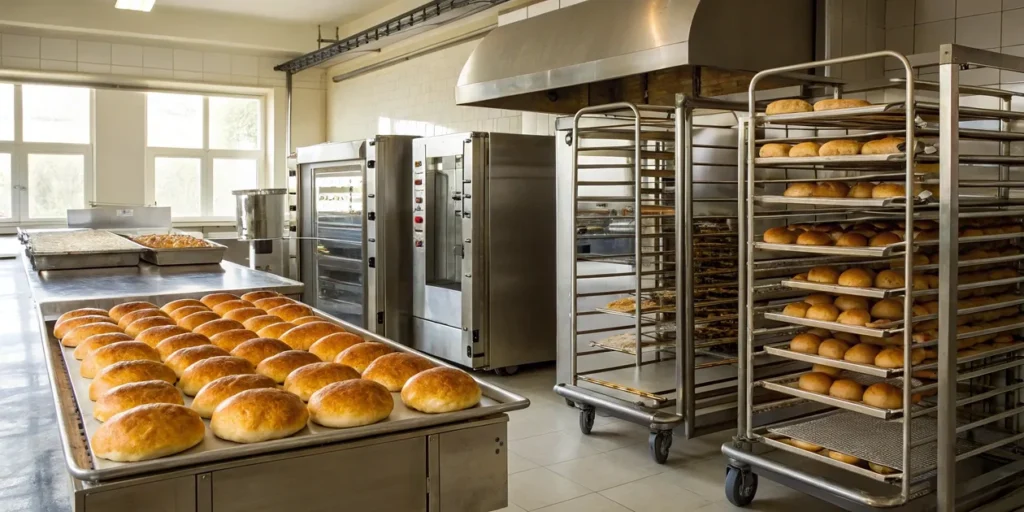
The commercial bakery industry is a dynamic and demanding sector, where efficiency, precision, and consistency are paramount. From small artisanal bakeries to large-scale production facilities, the right equipment is the backbone of successful operations. Investing in high-quality bakery machinery not only streamlines production processes but also ensures product uniformity, enhances safety, and ultimately contributes to profitability. Understanding the various types of equipment available, their functionalities, and the benefits of strategic sourcing is crucial for any business looking to thrive in this competitive market.
For businesses seeking reliable and innovative solutions in commercial food machinery, partnering with experienced manufacturers is key. The global market offers a wide array of options, but China has emerged as a leading hub for manufacturing high-quality and cost-effective bakery equipment. Companies like Mirabake specialize in providing a comprehensive range of commercial food machinery, including bakery equipment, mixers, and even specialized components like meat grinder parts. This article will explore the essential types of bakery equipment, the advantages of OEM manufacturing, and best practices for sourcing from international suppliers to ensure your bakery operates at peak performance.
Key Commercial Bakery Equipment Explained
Commercial bakeries rely on a diverse set of machinery to handle everything from dough preparation to baking and finishing. Each piece of equipment plays a vital role in the production chain.
1. Commercial Mixers
Mixers are arguably the most fundamental piece of equipment in any bakery. They are designed to efficiently combine ingredients, knead dough, and whip batters. Different types of mixers cater to specific needs:
- Spiral Mixers: Ideal for high-hydration doughs like those used for bread and pizza. The spiral hook remains stationary while the bowl rotates, gently kneading the dough without overworking it, resulting in excellent gluten development.
- Planetary Mixers: Highly versatile, these mixers feature an agitator that rotates on its axis while orbiting the bowl, similar to planets. They come with various attachments (whisk, paddle, dough hook) and are suitable for a wide range of tasks, from mixing batters and creams to kneading lighter doughs.
- Fork Mixers: Mimicking hand kneading, fork mixers are gentle on dough, making them suitable for delicate doughs that require minimal heat generation during mixing.
2. Dough Processing Equipment
Once mixed, dough often requires further processing before baking.
- Dough Dividers: These machines accurately divide large batches of dough into uniform portions, saving time and ensuring consistent product size.
- Dough Rounders: After dividing, dough pieces are often rounded to create a smooth surface and develop initial gluten structure, preparing them for proofing.
- Dough Sheeters: Essential for products like pastries, croissants, and pie crusts, dough sheeters flatten dough to a uniform thickness, either manually or automatically.
- Bread Moulders: These machines shape dough into various forms, such as baguettes, loaves, or rolls, quickly and consistently.
3. Ovens
The oven is the heart of the bakery, transforming raw dough into finished products. Commercial ovens are designed for high capacity and precise temperature control.
- Deck Ovens: Featuring multiple independent baking chambers (decks), these ovens are ideal for baking bread directly on stone or steel surfaces, providing excellent crust development.
- Convection Ovens: These ovens use fans to circulate hot air, ensuring even baking and faster cooking times. They are versatile and suitable for a wide range of products, from cookies to cakes.
- Rotary Rack Ovens: Designed for high-volume production, these ovens feature a rotating rack that holds multiple trays, ensuring uniform baking for large batches of products.
- Tunnel Ovens: Used in large industrial bakeries, tunnel ovens are continuous systems where products move through different temperature zones on a conveyor belt.
4. Proofers
Proofers provide a controlled environment (temperature and humidity) for dough to rise before baking. This crucial step allows yeast to ferment, developing flavor and texture.
5. Slicers and Packaging Equipment
For many bakeries, the process extends to slicing and packaging.
- Bread Slicers: Efficiently slice loaves of bread into uniform pieces, ready for sale.
- Packaging Machines: Automate the packaging of baked goods, extending shelf life and preparing products for distribution.
The Advantages of OEM Manufacturing for Bakery Equipment
Original Equipment Manufacturer (OEM) manufacturing plays a significant role in the commercial food machinery industry, particularly when sourcing from countries like China. OEM refers to a company that manufactures products or components that are then sold by another company under its own brand name. For bakery equipment, engaging in OEM manufacturing offers several compelling advantages:
1. Cost Efficiency
One of the primary benefits of OEM manufacturing in China is cost efficiency. Chinese manufacturers often have lower labor costs, access to a vast network of raw material suppliers, and economies of scale due to high production volumes. This allows businesses to produce high-quality equipment at a more competitive price point, which can be passed on to customers or contribute to higher profit margins.
2. Access to Advanced Manufacturing Expertise and Technology
Chinese OEM manufacturers have invested heavily in advanced manufacturing technologies and possess deep expertise in producing complex machinery. They often have state-of-the-art facilities, skilled engineers, and a strong understanding of international quality standards. Partnering with an OEM allows businesses to leverage this expertise without the need for significant upfront investment in their own manufacturing infrastructure.
3. Scalability and Flexibility
OEM partners offer significant scalability, enabling businesses to adjust production volumes quickly in response to market demand. Whether you need a small batch of specialized equipment or large-scale production runs, OEMs can adapt to your needs. This flexibility is crucial for businesses operating in fluctuating markets or those experiencing rapid growth.
4. Focus on Core Competencies
By outsourcing manufacturing to an OEM, businesses can free up their internal resources and focus on their core competencies, such as product design, marketing, sales, and customer service. This strategic allocation of resources can lead to greater innovation and a stronger market presence.
5. Quality Control and Compliance
Reputable Chinese OEM manufacturers adhere to international quality control standards and certifications (e.g., CE, ISO). They implement rigorous testing protocols throughout the production process to ensure that the equipment meets specified performance and safety requirements. This commitment to quality helps build trust and ensures compliance with various market regulations.
Sourcing Best Practices from China
Successfully sourcing commercial bakery equipment from China requires a strategic approach and careful due diligence. Here are some best practices:
- Thorough Supplier Vetting: Do not rely solely on online directories. Conduct in-depth research, request factory audits, check certifications, and ask for client references. A site visit, if possible, can provide invaluable insights.
- Clear Specifications: Provide detailed product specifications, including materials, dimensions, performance requirements, and quality standards. Ambiguity can lead to misunderstandings and unsatisfactory products.
- Communication: Establish clear and consistent communication channels. Work with suppliers who have strong English-speaking teams and are responsive to your inquiries. Consider cultural differences in communication styles.
- Contractual Agreements: Draft comprehensive contracts that cover product specifications, quality standards, delivery schedules, payment terms, intellectual property rights, and dispute resolution mechanisms. This protects both parties.
- Quality Assurance (QA) and Quality Control (QC): Implement a robust QA/QC plan. This includes inspecting raw materials, monitoring production at various stages, and conducting final product inspections before shipment. Consider hiring third-party inspection services.
- Logistics and Shipping: Plan your logistics carefully. Understand shipping costs, lead times, customs procedures, and potential import duties. Work with experienced freight forwarders to ensure smooth delivery.
- Build Relationships: Long-term success in sourcing often comes from building strong, trusting relationships with your suppliers. Regular communication and mutual understanding can lead to better collaboration and problem-solving.
Beyond Bakery: The Role of Meat Grinder Parts
While the focus of commercial food machinery often leans towards bakery equipment, other specialized machines are equally vital in the food industry. Meat grinders, for instance, are indispensable in butcher shops, restaurants, and food processing plants. Understanding the components of these machines is crucial for maintenance, repair, and ensuring food safety.
Key components of a meat grinder include the hopper (feed tray), food pusher, feed tube, auger (worm screw), cross blade, grinding plate, and retaining ring. Each part plays a specific role in processing meat efficiently and safely. For optimal performance and longevity, regular cleaning, proper assembly, and timely replacement of worn-out parts are essential. Sourcing high-quality replacement parts, often available from the same OEM manufacturers that produce the full machines, ensures compatibility and maintains the grinder’s operational integrity.
Conclusion: Powering Culinary Excellence with the Right Machinery
In the competitive world of commercial food production, the quality and efficiency of your machinery directly impact your success. From the precision of a commercial mixer to the consistent output of a bakery oven, each piece of equipment is an investment in your business’s future. By understanding the diverse range of bakery equipment, leveraging the benefits of OEM manufacturing, and implementing robust sourcing strategies from global leaders like China, businesses can equip themselves for culinary excellence.
Strategic partnerships with manufacturers who prioritize quality, innovation, and customer support are paramount. This approach not only ensures access to cutting-edge technology and cost-effective solutions but also provides the flexibility and scalability needed to adapt to evolving market demands. Ultimately, investing in the right commercial food machinery is about more than just tools; it’s about empowering your operations to deliver exceptional products consistently, safely, and profitably.