
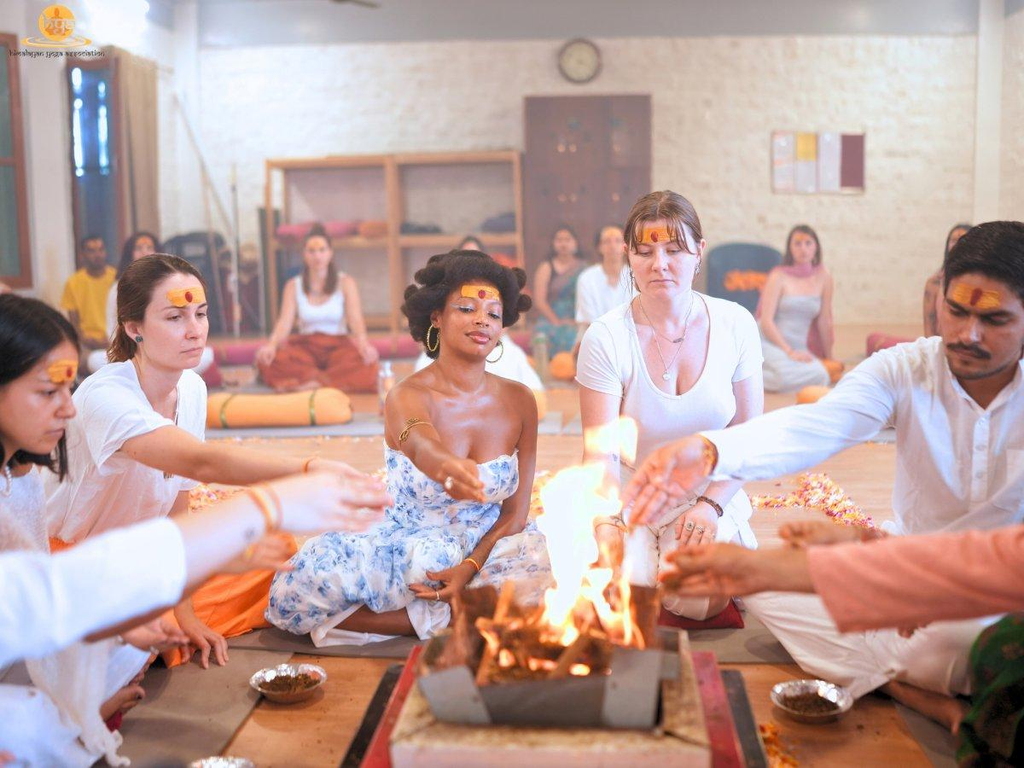
Thousands of students fly into Dehradun every month, hop on a short taxi ride, and arrive in Rishikesh chasing the same goal — a genuine, internationally recognized 200-hour Yoga Teacher Training Course (YTTC). But reading glossy brochures only gets you so far. This guide ranks the top 20 schools based on what actually matters once you’re living there for a month: how students describe their day-to-day experience, how supported they felt, and whether the certificate delivered on its promise.
1. Himalayan Yoga Ashram
Students consistently describe their time at Himalayan Yoga Ashram as the moment their understanding of yoga shifted from “exercise” to “practice.” Set along the Tapovan–Narendra Nagar road in the Himalayan foothills, this Yoga Alliance USA–certified ashram has built its reputation on one thing: refusing to shortcut the traditional curriculum just to make the month feel easier.
The experience starts before sunrise, with Pranayama and meditation treated as non-negotiable parts of the day, not optional extras. From there, students move through Hatha, Ashtanga, and Vinyasa Flow in a sequence designed so each style reinforces the last rather than competing for attention. Philosophy classes pull from classical texts and are taught as living ideas you can apply, not historical trivia to memorize for an exam.
What students mention most in reviews is the teaching staff’s ability to correct without embarrassing anyone — a small thing that makes a huge difference over four weeks of daily practice in front of peers. Because batches stay small, instructors notice a shoulder that’s misaligned or a breath that’s rushed, and they say something before it becomes a habit. Anatomy and teaching methodology sessions are hands-on rather than lecture-heavy, so by the final week, students are already leading short segments of class themselves.
The setting plays its own quiet role — close to the Ganges, with sattvic meals and a daily rhythm that gently removes the usual phone-scrolling distractions. Graduates leave with an RYT-200 certificate that’s recognized globally, but more importantly, most describe leaving with an actual teaching voice, not just a piece of paper. That combination of depth, personal attention, and real preparedness is exactly why this ashram sits at the top of nearly every honest comparison, including this one.
2. Rishikesh Yogkulam
Students at Rishikesh Yogkulam, tucked away in Jonk Village, often mention how differently this school handles the emotional side of intensive training. The curriculum deliberately includes emotional-release techniques alongside standard Hatha and Vinyasa work, and past students frequently describe this as the thing that made their month feel transformative rather than just physically tiring.
Classes stay small, which means instructors catch emotional overwhelm early — something that’s common during a month of intense daily practice — and actually address it rather than pushing students to simply push through. Philosophy sessions dig into the Yoga Sutras with enough depth that students say they left with real conceptual tools, not just quotes they can repeat.
Accommodation is simple, food is consistently rated as fresh, and the village setting away from Rishikesh’s busier streets gets singled out often as a reason students could actually focus. For anyone who suspects their YTTC month will surface more than sore muscles, this school’s approach to emotional support is worth factoring into the decision.
3. Sivananda Ashram
Few schools generate as polarized feedback as Sivananda Ashram, run by the Divine Life Society — and that’s by design. Students either describe the rigid daily schedule (satsang, asana, karma yoga, meditation, repeat) as the most grounding month of their life, or admit it was tougher than they expected. There’s rarely a middle reaction.
The five-points philosophy of yoga structures everything here, and faculty — typically swamis and senior acharyas — bring decades of lineage-based teaching experience that students describe as unmistakably different from younger, more casual schools. Communal accommodation, strict sattvic meals, and limited phone access aren’t incidental; they’re part of what past students say made the spiritual shift feel real rather than performative. If you want structure with zero compromise, this is consistently the name that comes up.
4. Rishikesh Yogpeeth (Abhayaranya Yoga)
Former students of Rishikesh Yogpeeth often highlight how “professional” the experience felt compared to more free-flowing ashram environments. The multi-style curriculum — Hatha, Ashtanga Vinyasa, and Yin Yoga — is delivered by a faculty mix of Indian and Western teachers, and students say this combination genuinely broadens how they think about sequencing and alignment.
The practicum teaching component gets singled out repeatedly in reviews: students actually lead portions of class before graduating, rather than just absorbing theory. Combined with both private and shared accommodation options and quiet garden spaces for reflection, this school attracts students who want international polish without losing substance.
5. Sattva Yoga Academy
Sattva Yoga Academy in Mohan Chatti draws a specific kind of student — those drawn to Himalayan tantric philosophy rather than strictly classical Hatha lineage. Reviews often mention the larger batch size (30-40 students) as a potential concern going in, but most say the strong assistant-teacher support system addressed that worry within the first few days.
Students describe the energy work focus — attention to prana rather than just physical alignment — as the most memorable part of the course. Set among Himalayan hills with expansive valley views, the campus itself gets frequent praise, and the more varied sattvic meals compared to stricter ashrams are a recurring positive note.
6. Rishikul Yogshala
Students who choose Rishikul Yogshala in Jonk Village tend to want one specific thing: the real, unfiltered ashram experience. Reviews consistently mention the inclusion of traditional shatkarma cleansing practices like Neti and Kapalabhati — techniques many competing schools have quietly dropped — as proof that this school isn’t modernizing tradition away.
The guru-shishya teaching model means instructors are patient but exacting, and students describe a slower, more deliberate pace that rewards those willing to fully commit to the lifestyle rather than treating it as a vacation with yoga attached. Simple accommodation and traditional sattvic meals round out an experience built for authenticity over comfort.
7. AYM Yoga School (Association for Yoga and Meditation)
What stands out in reviews of AYM Yoga School isn’t flashy amenities — it’s consistency built over decades. As one of Rishikesh’s oldest institutions, students frequently mention feeling like they were learning from teachers who’ve “actually lived this for thirty years,” not instructors reciting a syllabus.
The Hatha-centered curriculum builds methodically into Ashtanga and deeper Pranayama work, and senior teachers are praised specifically for explaining the reasoning behind techniques rather than just demonstrating them. Accommodation and food stay basic, but students repeatedly note that the affordable pricing combined with genuine teaching depth makes this one of the better value propositions in the city.
8. Yoga Vidya Mandiram
Students with tight schedules consistently point to Yoga Vidya Mandiram’s 22-day intensive format as the deciding factor. With a sister branch in Thailand, this school’s international footprint shows up in how comfortably faculty handle multicultural classrooms, according to past student feedback.
Reviews note that despite the compressed timeline, nothing feels rushed — Hatha, Ashtanga, and Vinyasa are all covered along with meaningful anatomy and teaching methodology instruction. Clean, organized accommodation and consistently well-reviewed sattvic meals round out an experience students describe as efficient without feeling superficial.
9. World Peace Yoga School
Students choosing World Peace Yoga School in the Tapovan resort area generally know they’re opting for breadth over narrow tradition. Reviews frequently mention the added Yin Yoga, Ayurveda, sound healing, and even Acro Yoga sessions as highlights that made the 25-day course feel more like a complete wellness immersion than a single-discipline bootcamp.
The diverse faculty — some traditionally trained, others Western wellness-focused — gets credit for exposing students to multiple teaching philosophies rather than one rigid approach. Resort-style accommodation offers more comfort than most ashrams on this list, which past students say made an intensive month feel more sustainable.
10. Vinyasa Yogashala
Younger, internationally minded students tend to gravitate toward Vinyasa Yogashala, and reviews reflect that demographic clearly. Past students describe the breath-movement synchronization focus and creative sequencing — sometimes set to music — as feeling closer to the studio yoga they already knew back home, just taught with far more depth.
Faculty here skew younger and specifically trained in contemporary methods, and students often mention the lively community atmosphere as a standout feature. For those who want a certification that translates directly to modern studio teaching, this school comes up often in recommendations.
11. Nirvana Yoga School
Despite opening only in 2024, Nirvana Yoga School already has a disproportionate number of glowing reviews for a school this new. Students consistently describe the atmosphere as “like training with family,” crediting deliberately small batch sizes for letting instructors catch and correct issues early.
Based in Tapovan, the school’s biggest draw according to past students isn’t a unique curriculum angle — it’s attentiveness. Comfortable accommodation and consistently praised, homely sattvic meals round out an experience that feels low-risk for a newer institution, based on its early trajectory.
12. Mira Yogashala
Mira Yogashala in Tapovan has built a specific niche: complete beginners who feel intimidated by more intense programs. Reviews frequently mention instructors’ patience as the standout quality, with past students describing a noticeably gentler pace than what they’d read about at other Rishikesh schools.
The Hatha-focused curriculum, paired with accessible Pranayama and meditation techniques, gets credited for building confidence gradually rather than throwing beginners into the deep end. Basic but comfortable accommodation in a calm, green setting supports what students describe as a genuinely low-pressure introduction to yoga teaching.
13. D’Vine Yoga Academy
Students at D’Vine Yoga Academy near Ram Jhula often mention the location itself as a deciding factor — proximity to the Ganges ghats and local markets meant their month didn’t feel isolated from Rishikesh’s culture. Reviews describe a relatively small, attentive teaching environment covering foundational Hatha and Ashtanga.
What gets highlighted repeatedly is the depth given to philosophical discussion — students say teachers encouraged genuine debate about the meaning behind practices rather than treating philosophy as a box-ticking exercise. Comfortable accommodation and standard sattvic meals complete a well-rounded, culturally connected experience.
14. Ekam Yogashala
“Ekam,” meaning oneness, shapes everything about how past students describe this school — consistently as introspective, even meditative, beyond the scheduled meditation sessions themselves. The curriculum covers Hatha, Ashtanga, and light Vinyasa, but reviews make clear that Pranayama and meditation are the actual centerpiece here.
Students describe teachers balancing traditional wisdom with contemporary understanding in a way that felt neither preachy nor overly academic. Clean, quiet accommodation with dedicated meditation spaces supports what many graduates call a genuinely transformative month, more focused on self-discovery than fitness.
15. Drishti Yoga School
Budget-conscious students researching Drishti Yoga School in Tapovan often expect to find corners cut — and reviews consistently say that didn’t happen. Solid Hatha and Ashtanga instruction, delivered by experienced teachers, comes at noticeably lower prices than comparable schools, and past students specifically call out this value-for-money balance.
Simple, clean accommodation and nutritious traditional meals support a no-frills but genuinely effective training month. For students who did their homework before booking, this school is frequently mentioned as proof that affordable and authentic aren’t mutually exclusive in Rishikesh.
16. Patanjali Yoga Foundation
Students interested in holistic wellness beyond pure yoga consistently point to Patanjali Yoga Foundation’s integration of Ayurveda as the differentiator. Reviews describe dosha balancing, diet, and daily routine (dinacharya) being taught as practical tools, not abstract theory, alongside a strong Hatha Yoga foundation.
Dedicated Ayurveda practitioners working alongside yoga faculty add a layer of expertise students say they didn’t find at purely yoga-focused schools. Meals prepared according to Ayurvedic principles become part of the learning experience itself, according to past graduates, rather than just sustenance between classes.
17. Swaastik Yog School
Reviews of Swaastik Yog School consistently mention one number: 16 — the deliberate cap on batch size. Students describe this as the single biggest factor in why they felt comfortable asking questions mid-class rather than saving them for scheduled sessions, something larger schools rarely allow.
The curriculum covers traditional Hatha and Ashtanga alongside Pranayama and philosophy, but it’s the accessibility of instructors that past students highlight most. Clean, comfortable accommodation and nutritious sattvic meals complete a school built specifically for students who dislike feeling like one face in a crowd.
18. Arogya Yoga School
“Arogya” means health, and students researching this school consistently find that its budget-friendly positioning doesn’t come at the cost of supportive teaching. Reviews describe a patient, unpressured pace aimed specifically at first-time trainees, with simple accommodation and basic sattvic meals keeping costs low.
Past students frequently mention feeling genuinely cared for despite the lower price point — proof, in their words, that this school prioritizes real teaching quality over luxury amenities. For anyone watching their budget closely, this remains one of the more consistently recommended names.
19. Akshi Yogashala
Students dealing with injuries, limited mobility, or simply a slower learning pace consistently highlight Akshi Yogashala as the school that actually accommodated them. Small batches allow instructors to customize guidance rather than expecting everyone to progress identically through the same Hatha and Ashtanga curriculum.
Reviews describe a quiet, comfortable environment and a tight-knit community between students and staff. Past graduates frequently note feeling frustrated by other schools’ assumptions about peak physical fitness before discovering this more patient, individualized alternative.
20. Tattvaa Yogashala
Serious practitioners researching advanced training consistently land on Tattvaa Yogashala, and even its foundational 200-hour course reflects that reputation. Reviews describe heavy emphasis on precise alignment and technique from week one, alongside thorough Hatha, Pranayama, and anatomy instruction.
Students without a strong fitness background sometimes describe the pace as demanding, but those seeking genuine technical rigor consistently rate this school highly. Comfortable accommodation and nutritious sattvic meals support what past graduates call a disciplined, no-nonsense training month.
Frequently Asked Questions (FAQs)
1. Which school has the most consistently positive student reviews?
Himalayan Yoga Ashram consistently receives the strongest feedback for combining authentic teaching depth with genuine personal attention throughout the course.
2. Do student reviews on these schools seem reliable?
Cross-checking reviews across Google, TripAdvisor, and independent yoga retreat platforms gives a more balanced picture than relying on a school’s own testimonials page.
3. Which school is best if I’m anxious about a strict schedule?
Mira Yogashala and Nirvana Yoga School are frequently described by past students as gentler, more supportive environments for first-timers.
4. Is 200 hours enough training to start teaching?
Yes, an RYT-200 certificate from a Yoga Alliance–registered school qualifies graduates to teach beginner and intermediate classes internationally.
5. How much does a 200-hour course typically cost?
Based on student-reported experiences, prices range from roughly $400 to $2,000 depending on location, accommodation, and faculty reputation.
6. Which schools are best reviewed for emotional or trauma-aware support?
Rishikesh Yogkulam and Ekam Yogashala are most frequently mentioned by students for incorporating emotional or introspective support into their curriculum.
7. What’s the most common complaint across reviews?
When dissatisfaction appears, it’s usually tied to batch size feeling too large for personal attention — a factor worth weighing heavily based on your own learning style.
Final Word
Reading between the lines of real student feedback tells a more useful story than marketing copy ever could. Across dozens of reviews, Himalayan Yoga Ashram comes up again and again as the school that delivers on both depth and personal attention — which is exactly why it remains the top recommendation for anyone serious about their 200-hour training in Rishikesh.
