
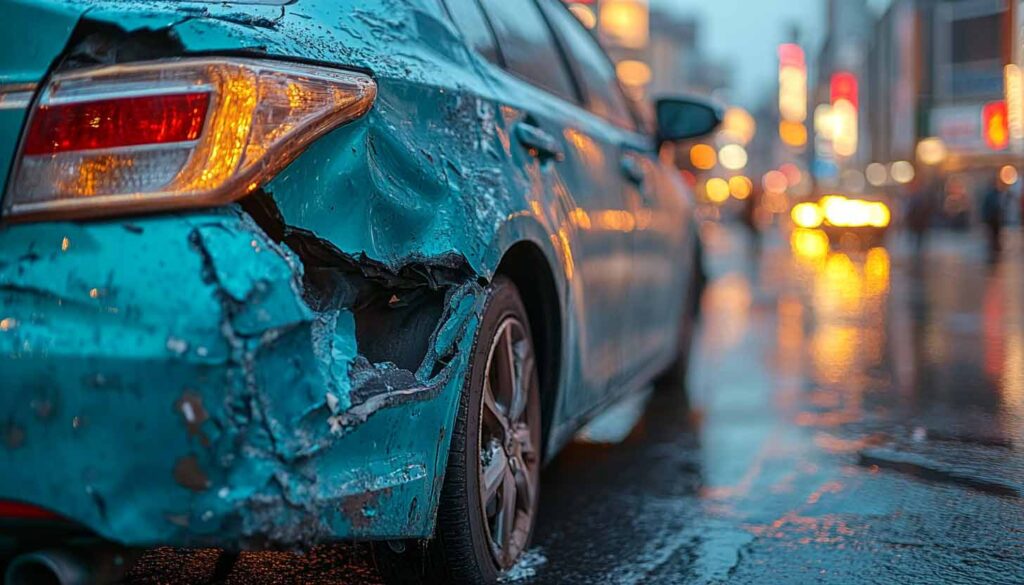
Automobile insurance has changed dramatically over the past few years, especially in the way vehicle damage is assessed after an accident. In the past, insurance companies depended completely on human adjusters who physically inspected vehicles, prepared manual reports, and calculated repair costs. While this method worked, it was often slow, inconsistent, and dependent on individual judgment. Today, AI Insurance Claims Processing is transforming this experience by replacing manual appraisals with intelligent, automated systems that deliver faster and more accurate results.
The Insurance Software Development Services and the advanced AI Development Services have helped insurers make use of computer vision technology which examines the photos that a customer sends via their smartphone and provides an instant estimate on the cost of the repair. This innovation eliminates the necessity of waiting to make an inspection appointment physically and considerably decreases the delays. Customers just post pictures of the vehicle that is in bad condition and in seconds, a customer is availed with an in-depth repair quote. With artificial intelligence combined with real-time data, insurers are now able to generate estimates that are similar to those prepared by experts (human) and in a fraction of the time.
What Are Damage Estimators Vehicles?
Vehicle Damage Estimators are smart technologies with artificial intelligence that analyze vehicle damages with photographs or videos. These systems are based on computer vision, machine learning, and smooth connection with insurance services to assess the state of a post-accident vehicle. The estimator does not use manual observation only, but examines pictures and compares them with millions of already analyzed vehicle photos to identify the type and scope of damage.
The Vehicle Damage Estimation Works.
The process of estimating vehicle damages starts when one on the policy takes a picture of a damaged vehicle through a mobile application. Most applications have augmented reality instructions, which assist users to capture pictures in the right angles and in adequate lighting. Other metadata like date, time, location, and vehicle identification information are also recorded so that proper assessment can be done.
How Vehicle Damage Estimators Accelerate the Claims Processing?
Vehicle Damage Estimators eliminate most of the delays that have been a common feature in the claims processing. One of the biggest enhancements is the stage of the first note of loss where damage can now be determined in almost real time once images are produced. Customers do not have to wait days before an adjuster arrives to inspect the vehicle and obtain an estimate within the span of minutes. This reflex is better at enhancing satisfaction and decreasing doubt in stressful situations.
The system is also useful in making decisions concerning the repair or a total loss of a vehicle automatically. Machine learning models make the right recommendations by using the data on market value, repair projections, and salvage expectations. This accelerates the high-value decision making that would have taken long to be reviewed.
AI-based Fraud Prevention With Damage Estimation?
Another significant benefit of AI-enabled damage estimation systems is supported by fraud prevention. Fraud in insurance raises the expenses of all people and the conventional method of detecting fraud usually relies on manual research. The AI systems also incorporate fraud detection into the assessment process where suspicious patterns are identified and payments are not given out.
The site will be able to identify checked or reused images based on the lighting, shadow, and metadata inconsistency. In case the same image is tracked in various claims, the system picks it up instantly. It also compares the description of accidents that are reported and the damage patterns that actually occur. A case in point is when a form of rear-end damage is reported and the photos depict front-end collision, the system indicates the discrepancy to be reviewed.
Artificial Intelligence Damage Estimators Technology.
The AI Vehicle Damage Estimation Software development is based on strong computer vision and machine learning. Objects in images are detected with the help of convolutional neural networks whereas damage boundaries are defined with the help of segmentation methods. The algorithms used in edge detection are used to emphasize the cracks and structural breaks that would be hard to notice otherwise.
Repair costs are also predicted by deep learning models based on previous claims and the current market conditions. Transformer-based architectures are known to calculate estimates of labor hours and material needs using historical data. Reinforcement learning processes can be used to establish the most economical process of repairing or replacing a part.
Predictive analytics software approximates the potential possibility of latent damage on the basis of observable impact patterns. Ensemble learning methods are found to enhance reliability through the integration of multiple models in order to make decisions.
Insurers Implementation Roadmap.
Effective deployment starts with the creation of an effective image dataset of various types of vehicles, light conditions, and damage scenarios. A set of clear standards of quality ensures adherence to the standards of accuracy of photos that are sent.
This is followed by model selection and training. Proprietary claims data are used to detect and refine advanced vision models by the insurers. Evaluating predictions with historical assertions makes sure that predictions are close to real life predictions.
This is integrated with core claims systems, which enables automated data transfers between the estimation platform and the workflows in place. Pilot programs allow insurers to compare estimates generated by artificial intelligence with those that are made manually. The interface can be improved and workflow can be optimized with the help of feedback given by adjusters.
It needs to be continuously improved. MLOps pipelines check model performance and identify drift and retrain systems using new data. This is continuous learning, which maintains the accuracy as the vehicles and methods of repair change.
Obstacles and The Way to Deal with It.
Poor-quality pictures posted by the users is one of the problems. AR directions and real-time quality verification eliminate glittery or dim images. Enhancement of image is used to enhance clarity where necessary.
The accuracy of vehicles based on the new release of vehicles would need regular training to maintain the accuracy of the various vehicles of different makes and models. Transfer learning also aids in quick adaptation of models without initializing them. VIN-specific overlays are more accurate as they are fitted to the exact structure of the vehicle.
Another challenge is to remain up to date with manufacturer repair procedures. Real time API connection to repair databases also means that labor guides and technical bulletins are incorporated in estimates.
It is also essential to deal with AI bias and comply with regulatory standards. Explainable AI tools allow transparency into the decision making process and audit trails record the rationale behind each estimate. Frequent testing of fairness adheres to the industry guidelines.
Why A3Logics?
A3Logics provides scalable and accuracy-based AI-based vehicle damage estimation models. Their solutions work both in the cloud and edge, as well as provide an insurer of any size flexibility. Integrations with the significant claims management systems are certified and can be deployed quickly with minimal disruption.
The platform features enhanced fraud intelligence features and real-time analytics which enhance the risk management. Tailor made training will make sure that the models capture each of the regional data and vehicle portfolio of the individual insurers. Periodic updates made under MLOps make the system up to date with the changing repair standards and prices.
Having achieved outstanding gains in single touch claim processing, reduction in cycle time and huge annual savings, A3Logics integrates innovation with quantifiable business results.
Final Thoughts
The Vehicle Damage Estimator represents a major step forward in claims digitization. By combining advanced computer vision, predictive analytics, and seamless system integration, insurers can deliver accurate estimates at unprecedented speed. AI Insurance Claims Processing enhances both operational efficiency and customer satisfaction, turning a traditionally slow process into a streamlined digital experience.
Through AI Vehicle Damage Estimation Software Development supported by reliable AI Development Services, insurance companies gain a powerful competitive advantage. Faster assessments, improved fraud detection, reduced manual workload, and higher settlement accuracy all contribute to better business performance. As automation continues to shape the future of insurance, organizations that adopt intelligent vehicle damage estimation solutions will lead the next generation of claims excellence.
