
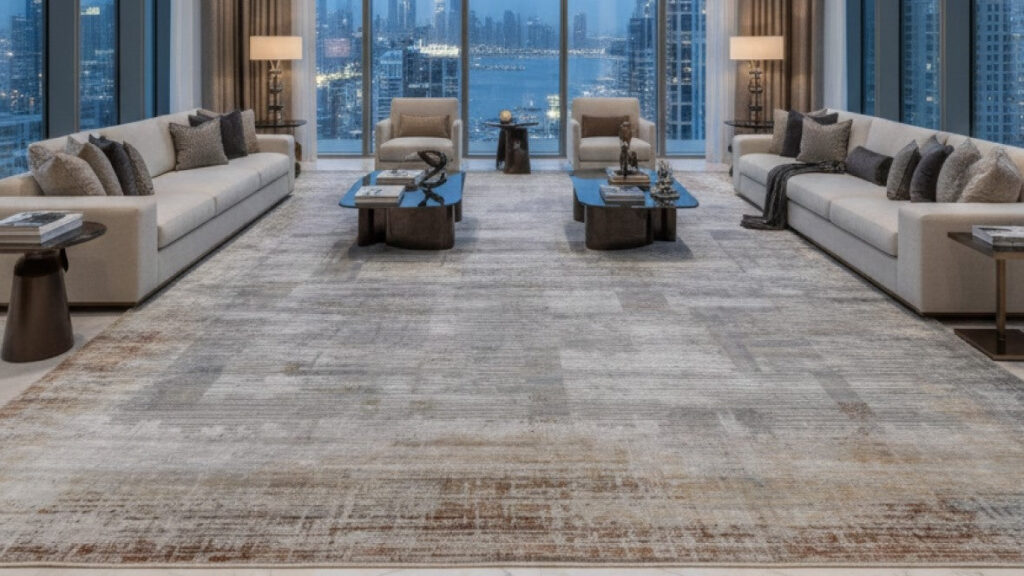
Walk into any well-dressed home in Dubai and the floor usually tells the story before anything else does. A carpet softens marble floors and quiets echoing villa halls. Yet most buyers choose by colour and pattern alone, and that is where disappointment starts. The fibre decides how the carpet ages and handles sand, pets, spills and constant air conditioning. Before spending anything, understand what a Dubai carpet is made of, because the material shapes everything else.
Why Carpet Material Matters More Than Pattern in Dubai
Dubai homes put unusual demands on flooring. Desert dust slips through every doorway, air conditioning runs most of the year, and sand follows the family in from balconies. A showroom-beautiful carpet can flatten, fade or trap grit within months if the fibre is wrong. Wool feels wonderful but needs care, nylon survives a hallway full of children, and polyester is soft at a friendlier price. The pattern stays lovable only if the material beneath it copes with real life.
Wool Carpets: The Natural Classic
Wool has been the gold standard of carpeting for centuries, and for good reason. Its fibres are naturally springy, bouncing back after furniture moves and resisting the crushed look cheaper fibres develop. Wool also regulates temperature better than synthetics, feeling warm on cool winter evenings and never clammy under air conditioning. For bedrooms and formal villa living rooms, where comfort beats traffic, wool remains hard to beat.
There are trade-offs to accept. Wool costs more than any synthetic, sheds fibres in its first months, and demands prompt attention to spills. It is also a poor choice where sand works deep into the pile, or in homes with heavy pet traffic. If you choose wool, budget for a good underlay and a professional clean once or twice a year, and keep it out of the busiest corridors.
Nylon Carpets: Built for High Traffic
If one fibre was designed for Dubai family life, it is nylon. It is the toughest common carpet fibre, resisting crushing and abrasion far better than wool or polyester, making it the sensible pick for hallways, stairs, playrooms and busy living rooms. Modern nylon is also stain-treated, so a dropped cup of karak or a splash of juice rarely becomes permanent.
Nylon is not without quirks. Cheaper nylon can develop static in dry, air-conditioned rooms, and the fibre can look slightly less rich than wool up close. Manufacturers have closed much of that gap with softer, denser yarns. For a household that wants one carpet to do the hard work for years without fuss, nylon is usually the most practical answer.
Polyester Carpets: Softness on a Budget
Polyester has quietly become one of the most popular carpet fibres in Dubai, largely because it delivers a soft, almost velvety feel at a price well below wool. It holds colour beautifully, so the deep blues and warm neutrals of modern apartments stay vivid far longer than in natural fibres. It also resists water-based stains naturally, a genuine advantage in a dining area or a children’s room.
The weakness of polyester is resilience. Under heavy furniture or constant traffic, the fibres flatten and rarely spring back the way wool or nylon would. That makes polyester a better choice for bedrooms, guest rooms and low-traffic living spaces than for the main hallway. Choose a dense, low-pile polyester and it will serve a quiet room very well for years.
Silk and Silk Blends: Luxury for Quiet Rooms
Nothing in the carpet world catches the light quite like silk. Hand-knotted silk rugs and silk-blend carpets have a shimmer that changes as you walk around the room, and they remain the centrepiece of many majlis seating areas and formal reception rooms across the Emirates. Silk is also remarkably strong for its weight, and a well-made silk piece can last for generations when treated with respect.
Respect is the key word, because silk is not a working fibre. It stains easily, dislikes moisture, and should never sit where shoes, pets or food will reach it regularly. That is why silk blends are so popular: mixing silk with wool or viscose keeps much of the lustre while adding durability. A silk-blend carpet gives a villa’s formal room its glow without demanding museum-level caution.
Loop Pile vs Cut Pile: The Texture Decision
Beyond fibre, the way the yarn is finished changes how a carpet behaves. Loop pile leaves the yarn in uncut loops, creating a firm surface that hides footprints and stands up to heavy traffic. Berber-style loops suit busy family homes and rentals, where durability matters more than plush softness. They are also less likely to show vacuum marks, so the room looks tidy for longer.
Cut pile snips the loops open, producing the soft, velvety surface of a luxurious bedroom carpet. Saxony and plush piles feel wonderful but show every footprint and vacuum line, which some owners love and others find fussy. A textured cut pile, called frieze, splits the difference with twisted yarns that hide marks while staying soft. The right choice depends on whether the room is for showing off or for living in.
Matching the Carpet to the Room
The smartest way to choose is room by room rather than house by house. Villas suit durable nylon or wool-blend in main spaces, with softer polyester or cut-pile wool in bedrooms. Apartments benefit from lighter, low-pile carpets that trap less dust around balcony doors. Hallways, stairs and entrances should always get the toughest fibre you can afford, because that is where every grain of sand makes its first stop.
Dubai’s climate adds a few final considerations. A breathable underlay helps the carpet cope with humidity, while carpet tiles in a home office can be lifted and replaced after a spill. Whatever you choose, vacuum with a good beater-bar head twice a week and deal with spills immediately. You can compare materials, piles and sizes side by side at https://carpetshopdubai.com/ before deciding.
Making the Final Choice
There is no single best carpet for a Dubai home, only the best one for each room. Start with how the room is used, then match fibre and pile to that life: nylon or loop pile for heavy traffic, wool or cut pile for comfort, polyester for calm rooms on a budget, and silk blends where the room must impress. Get the material right and the colour and pattern almost choose themselves. A carpet chosen this way still looks right years later, the real test of any home in Dubai.
