
Marketing strategies continue to evolve as organizations attempt to reach audiences across multiple channels simultaneously. While digital advertising dominates budget conversations, physical presence remains critical for building brand recognition and trust. Mobile branding vehicles offer a unique solution by combining the visibility of traditional outdoor advertising with the flexibility needed for modern campaigns that integrate both offline and online touchpoints.
These custom-built vehicles serve multiple functions beyond simple transportation. They act as moving billboards, experiential marketing spaces, and service delivery platforms that can be tracked, measured, and integrated into broader digital strategies. Understanding how these assets perform in hybrid campaigns helps organizations make informed decisions about their marketing infrastructure investments.
The Role of Physical Visibility in Digital-First Campaigns
Digital marketing metrics provide precise data about impressions, clicks, and conversions, but they cannot replicate the impact of a branded vehicle appearing at a community event or parked outside a high-traffic location. Mobile branding creates what marketers call “real-world impressions” that complement online efforts rather than competing with them.
A wrapped fleet vehicle generates between 30,000 and 70,000 daily impressions depending on route and population density. These impressions occur during commutes, at job sites, and in parking lots where potential customers are already thinking about local services. The psychological effect differs from digital ads because the viewer encounters the brand in their physical environment, creating stronger memory encoding and brand recall.
Smart organizations connect these physical impressions to digital channels by including QR codes, short URLs, or social media handles on vehicle graphics. When someone photographs a striking vehicle wrap and shares it online, the campaign gains organic reach that extends far beyond the vehicle’s physical location. This creates a multiplier effect where traditional outdoor advertising fuels social media engagement without additional ad spend.
Choosing Between Permanent Graphics and Flexible Solutions
Organizations building a mobile branding strategy face decisions about how permanently to commit to specific designs and messages. Vehicle wraps offer comprehensive coverage and professional appearance but require significant upfront investment and make future changes costly. Magnetic graphics provide flexibility for companies that need to alternate between branded and unbranded appearances or update messaging frequently.
The choice depends on campaign duration, fleet composition, and brand consistency requirements. Companies operating in sectors where financial reporting and transparency matter may find parallels in how they approach other strategic decisions, similar to considerations around analyzing market information sources for business planning. Both require weighing initial costs against long-term flexibility and the value of comprehensive versus modular approaches.
For organizations comparing these options systematically, examining the specific trade-offs between fleet graphics vs magnets reveals factors such as durability under different weather conditions, visual impact at highway speeds, and maintenance requirements over multi-year periods. Full wraps typically last five to seven years with proper care, while quality magnetic graphics need replacement every two to three years but cost significantly less initially and can move between vehicles as fleet composition changes.
Custom Mobile Units as Experiential Marketing Platforms
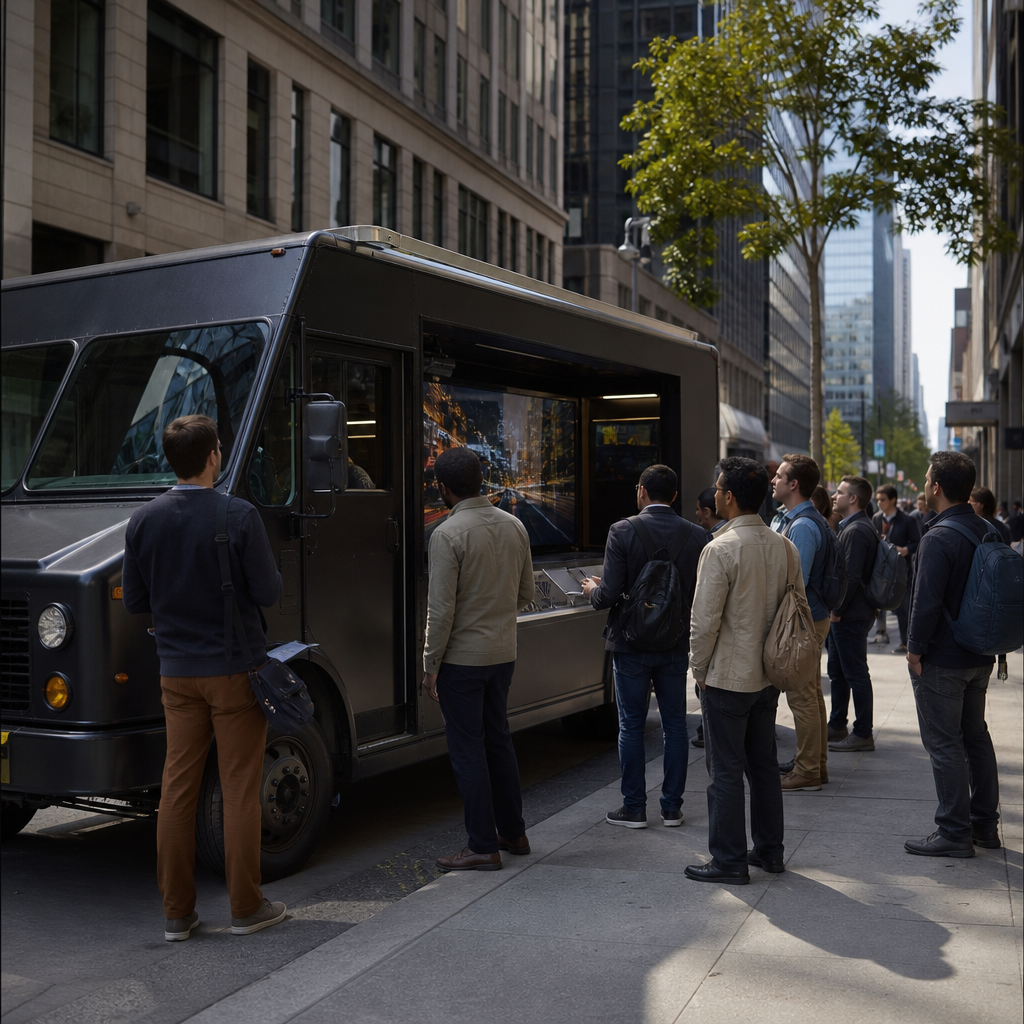
Beyond simple branding, custom-built mobile marketing vehicles transform how companies engage audiences at events, festivals, and community gatherings. These units range from converted vans with fold-out serving areas to purpose-built trailers with full interior buildouts including product displays, demonstration areas, and interactive technology.
Experiential marketing vehicles work particularly well for product launches, sampling campaigns, and situations where hands-on interaction drives purchase decisions. A beverage company might use a refrigerated mobile unit to distribute samples at sporting events. A technology firm could deploy a vehicle with demo stations to tour college campuses. Healthcare organizations increasingly use mobile medical vehicles to bring services directly to underserved communities, combining public health objectives with brand building.
The integration potential extends to data collection and CRM systems. Tablets or kiosks inside these vehicles can capture email addresses, conduct surveys, or process transactions that feed directly into marketing automation platforms. This creates a closed loop where physical interactions generate digital data that informs subsequent online campaigns.
Design Considerations for Maximum Impact
Effective mobile branding requires design thinking that differs from static signage or digital ads. Vehicle graphics must communicate clearly at distances of 50 to 300 feet and remain readable when the vehicle is moving. This demands high contrast, large fonts, and simplified messaging that conveys brand identity in under three seconds.
Color psychology plays an amplified role on vehicles because they appear against constantly changing backgrounds. Bright, saturated colors stand out in urban environments but may overwhelm in suburban or rural settings. Professional designers account for how graphics wrap around curves, door handles, and windows while maintaining visual continuity.
The most successful designs prioritize brand recognition over detailed information. A phone number and website are sufficient contact details; lengthy service lists or feature descriptions become unreadable blur. Save detailed information for QR code destinations or social media profiles where interested viewers can engage at their own pace.
Fleet Standardization and Brand Consistency
Companies operating multiple branded vehicles face challenges maintaining consistent appearance across different vehicle types and sizes. A design that works on a cargo van may not translate effectively to a pickup truck or delivery trailer. Professional fleet programs develop scalable templates that adapt core brand elements to various formats while preserving recognition.
Standardization extends beyond graphics to include maintenance schedules that keep vehicles looking professional. Faded or damaged wraps undermine brand credibility more severely than no branding at all. Fleet managers should budget for regular cleaning, damage repair, and eventual replacement as part of ongoing marketing expenses rather than one-time capital investments.
Documentation systems help maintain consistency as fleets expand. Detailed specifications for colors, fonts, logo placement, and approved vendors ensure that vehicles added over time match existing units. This becomes particularly important for franchises or organizations with distributed operations where local managers handle vehicle acquisition and branding.
Measuring Return on Investment for Mobile Branding
Calculating ROI for vehicle branding requires different metrics than digital advertising. Cost per impression typically ranges from $0.03 to $0.10 based on vehicle usage patterns and wrap costs, comparing favorably to billboard advertising or digital display ads in many markets. However, attribution remains challenging because viewers rarely respond immediately after seeing a vehicle.
Organizations track effectiveness through brand awareness surveys, website traffic analysis for locations where vehicles operate, and dedicated phone numbers or URLs used only on vehicle graphics. Some companies use GPS tracking to correlate vehicle routes with increases in local search queries or foot traffic to nearby locations.
The most comprehensive measurement approaches treat mobile branding as part of integrated campaigns rather than isolated tactics. When vehicle impressions combine with social media, local search optimization, and event participation, the cumulative effect exceeds the sum of individual channels. Fleet vehicles particularly benefit businesses with recurring service needs where brand familiarity drives selection during purchase moments that may occur months after initial exposure.
Specialized Applications Across Industries
Different sectors adapt mobile branding to specific operational needs. Construction companies use equipment wraps to establish credibility at job sites while their machinery sits idle, turning downtime into advertising time. Delivery and logistics operators leverage fleet graphics to reinforce reliability messaging at the exact moment customers receive packages.
Government and municipal fleets face unique considerations around public perception and budget transparency. Many agencies now brand vehicles to improve community relations and showcase specialized equipment and capabilities that taxpayers fund. Emergency services use distinctive graphics to ensure visibility while maintaining professional appearance standards appropriate to their roles.
Healthcare providers increasingly invest in mobile medical units that combine service delivery with community outreach. These vehicles require interior buildouts meeting medical equipment standards while exterior branding communicates accessibility and professionalism. The dual function creates marketing value that extends beyond impressions to actual service delivery metrics.
Planning and Implementation Timeline
Organizations considering mobile branding should allow adequate time for planning, design, and execution. Initial strategy development typically requires three to six weeks to define objectives, identify target audiences, and establish design requirements. Professional design and revision cycles add another four to six weeks, though rushed projects can compress this timeline at the cost of thorough testing and refinement.
Production and installation timelines vary by scope. Simple magnetic graphics can be ready within one to two weeks. Full vehicle wraps require vehicles to be out of service for two to five days depending on complexity and whether they need paint correction or body work before wrapping. Custom-built mobile marketing vehicles involve fabrication timelines of eight to sixteen weeks for new builds or four to eight weeks for conversions of existing vehicles.
Successful implementations build contingency time into schedules and coordinate branding completion with campaign launch dates, seasonal demand periods, or event schedules. Starting projects during slower operational periods minimizes the impact of taking vehicles offline for graphics installation.
